What Solitude Means for the Working Mind in the Age of AI
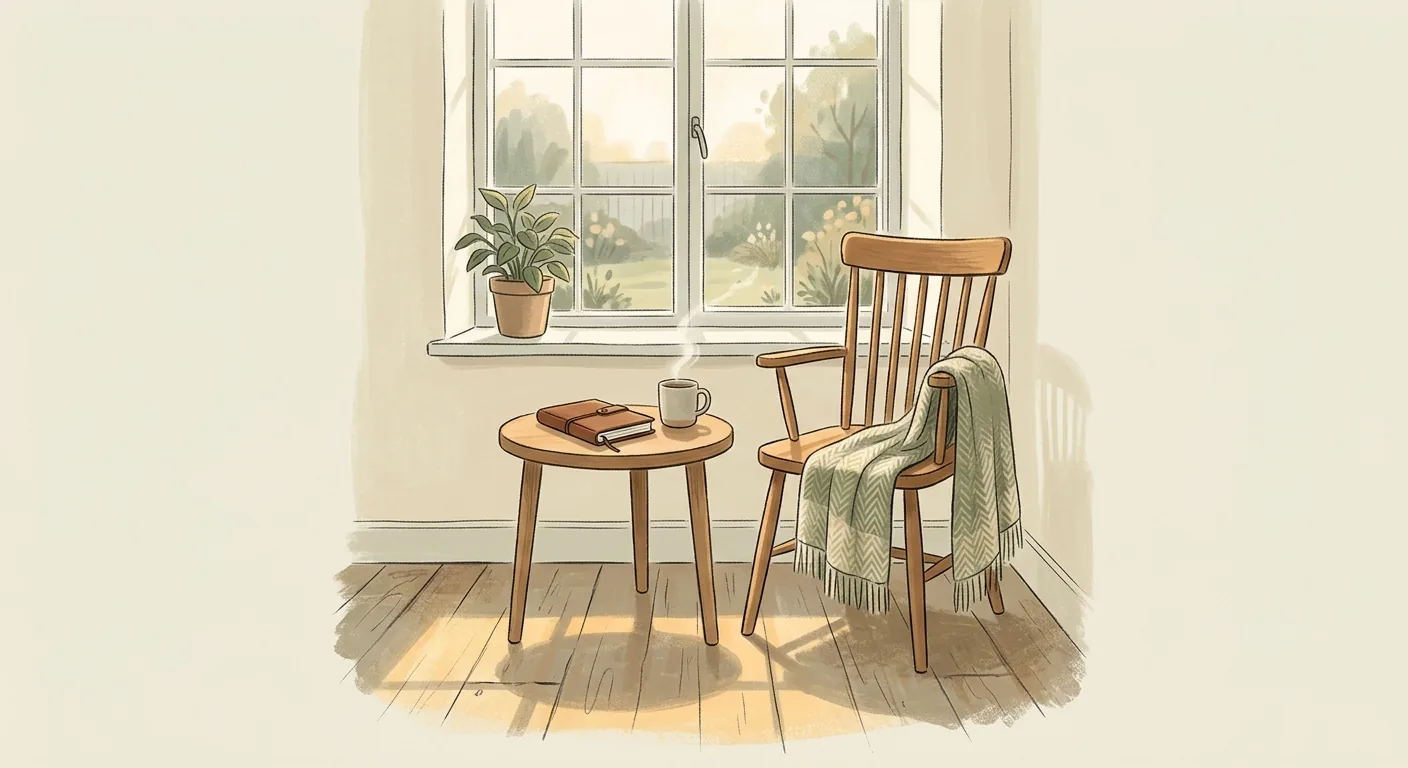
A new study of more than a thousand adults found that chosen, enjoyed time alone tracked with higher wellbeing and more mental flexibility, not less. The always-available AI chat window now fills those small alone moments first.
A new study of more than a thousand adults found that people who reported more chosen, enjoyed time alone also reported higher wellbeing and, surprisingly, more social support and more mental flexibility, not less. The benefit shows up when solitude is chosen, not imposed. The always-available AI chat window quietly fills the small alone moments before they start.
The Quiet Minute That Used to Go Unfilled
A head of operations told me last week that she could not remember the last time she had carried a thought all the way to the end before checking it against a chat window. The walk to the kettle. The minute before a call. The blank document at nine in the morning. Each of those used to be a small stretch of being alone with her own mind. Now each one has somewhere to go.
What the Research on the Benefits of Solitude Found
There is a real body of work on solitude, and a careful new entry landed this spring. A team led by Murat Yıldırım published a study in a peer-reviewed psychology journal in April, looking at more than a thousand adults. They measured something they call positive solitude, which they define plainly as a voluntary positive experience of being alone that people can enjoy.
Here is the part that surprised me. People who reported more positive solitude did not report being more cut off. They reported more perceived social support, more psychological flexibility (the ability to stay open and adaptable rather than rigid), and higher wellbeing overall. Being comfortable alone with your own mind tracked with feeling more connected and more adaptable, not less. This is the same gap we keep circling when we say the empty moment is not waste.
"positive solitude significantly predicted perceived social support (β = 0.16, p < 0.001) and psychological flexibility (β = 0.30, p < 0.001)"
Solitude vs Loneliness, and Why Choice Is the Hinge
Two honest limits. First, this was a snapshot, not a film. It measured people at one moment and asked them to report on themselves, so it can show that positive solitude and wellbeing travel together, but it cannot prove one causes the other. The sample also skewed young and mostly female in a single country. Hold the finding loosely.
Second, and this matters more, the benefit is about solitude that is chosen. Older diary work on everyday alone time found that the same hours feel very different depending on whether a person picked them. Chosen solitude is not loneliness. Imposed isolation is a different thing entirely, and nothing here speaks to it. Researchers have even tested teaching people to plan their time alone, which tells you how much the framing matters.
The Pull to Fill Every Gap With the Tool
Here is what I am sitting with, not as advice, just as something to watch. The next time there is a small gap in the day, the pause before a meeting, the blank screen, the half-formed question, notice the pull to hand it straight to the tool. That pull is the same one we named in the half-second before you reach for the tool. The research does not say the tool is the problem. It says chosen time alone with one’s own mind seems to be worth something, and those small gaps are where most of us still have it.
Chosen time alone did not make people more isolated in this data. It tracked with feeling more supported and more mentally flexible. The small unfilled moments in a workday are where most of us still get any of it.
So one quiet question for the week, for anyone running a team and a calendar. Does the day still hold a single stretch where a judgment is allowed to form on its own, before it meets a screen. Not a longer to-do list. Just one unfilled moment, kept on purpose, the same instinct behind teams that have started to protect recovery time after a heavy AI day. That might be where the steadiness the research keeps pointing at actually lives. The new shape of a workday gets figured out one unfilled moment at a time.
Sources
- Perceived social support and psychological flexibility mediate the relationship between positive solitude and psychological wellbeing among Turkish adults - Frontiers in Psychology, 2026-04-08
- Balance between solitude and socializing: everyday solitude time both benefits and harms well-being - Scientific Reports, 2023-10-19
- Crafting solitude: an intentional approach to solitude in emerging adults' everyday life - The Journal of Social Psychology, 2025-09-30
Written by Kinan Hamwi, Founder of Cerevisor.