When an AI agent trades the jobs number before you've read it, where did it get the number?
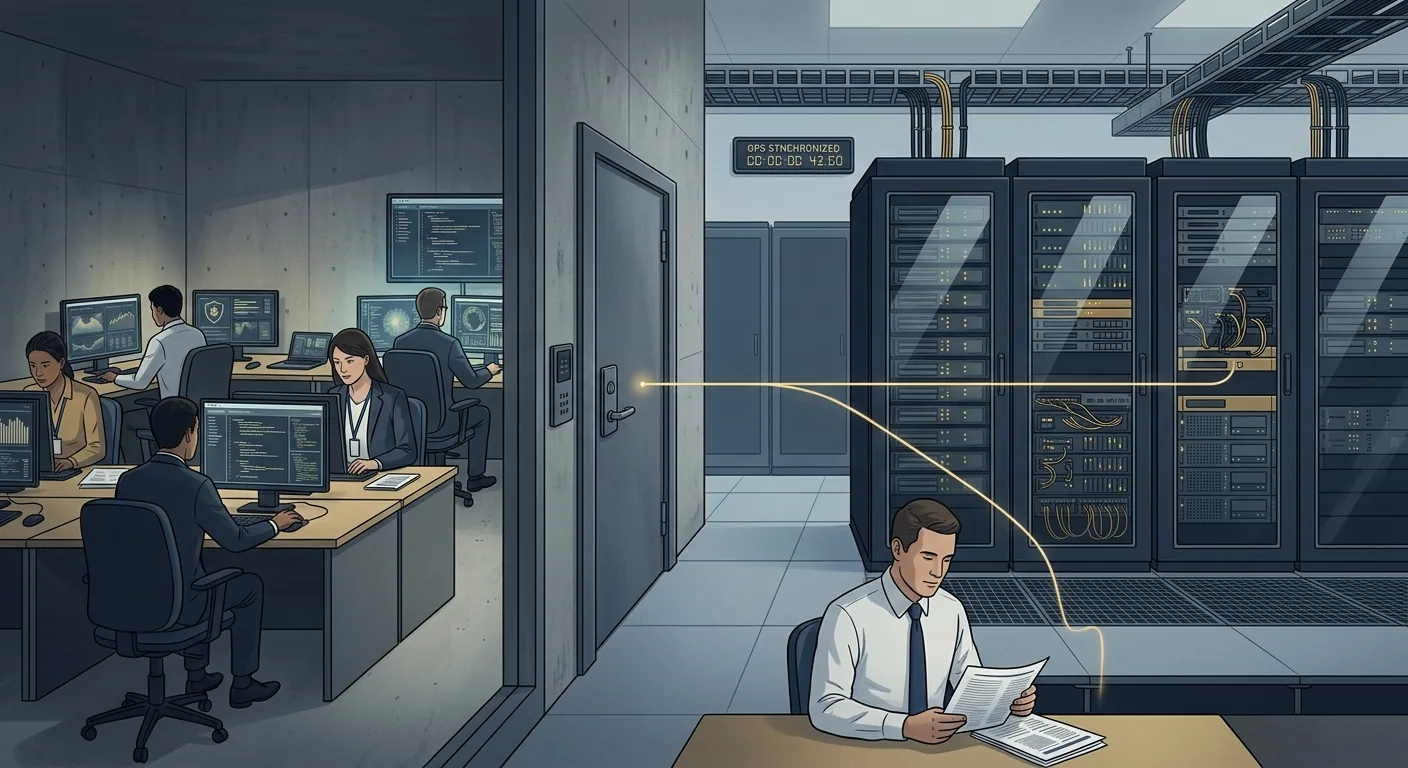
Government data is released at a fixed second, but a separate machine-readable feed pushes the structured number into co-located trading algos at that same instant, and a few indicators are sold three minutes early. Here is the data-release layer that decides who trades the print and why racing it is a losing game for the rest of us.
Government data lands at a fixed second, and a separate machine-readable feed drops the structured number into co-located trading agents at that exact instant, so the print is a position before a human reads a headline. One twist most of us miss: a few indicators are sold to that feed three minutes before the media gets them. The edge has moved off raw speed and onto the revision and the second move, which is the part we can actually still trade.
This Thursday morning, June 25, the May reading on the Fed’s preferred inflation gauge prints at 8:30 a.m. Eastern. Wells Fargo’s economists expect it up 0.5% month over month on energy costs, which would push the annual rate to 4.1%. We will watch the number, feel something, and maybe adjust. By the time we have read the headline, the two-year Treasury yield will already have moved, the way it jumped more than 16 basis points to 4.216% after Kevin Warsh’s first meeting as Fed chair the week before. The question worth asking is not what the number will be. It is who already had it the moment it existed, and through what pipe.
How a government number physically becomes a trade
Start with the part that is genuinely orderly. A release like the inflation gauge or the jobs report has a fixed clock time, set months in advance. Accredited journalists get the figures roughly 30 minutes early, inside a secure lock-up room at the Department of Labor, where they write their stories and are physically prevented from transmitting a single byte until the embargo lifts. The Census Bureau runs the same model and enforces it with teeth: a first violation costs a six-month suspension of embargo access, a repeat costs a year.
At the release second, two things fire at once. The human-readable story goes out, and a separate machine-readable feed pushes the structured number straight into trading systems. Vendors like AlphaFlash, run by Deutsche Boerse, carry more than 400 of these indicators and deliver them from inside the same data centers the exchanges live in, at CME’s Aurora campus, Equinix in New Jersey and Frankfurt, the ICE building in Basildon. The feed is timed with high-precision GPS so every client receives it in the same microsecond. An agent colocated there does not read a sentence. It receives a tagged value and acts.
The official release is built to be simultaneous for everyone. The speed race is not about beating the embargo. It is about being on the machine feed at all, sitting in the right building, while the rest of us are reading prose.
The three-minute door that is hiding in plain sight
Here is the detail that reframes the whole thing. For most indicators the parity is real and the GPS timing exists precisely to keep it real. But not all data is government data. The Chicago purchasing managers index, a closely watched regional gauge, is a private dataset, and its owner sells it. AlphaFlash states plainly that it delivers the Chicago number three minutes before the general media release. That is not a leak and not front-running. It is a product, disclosed and priced. Three minutes is a geological era when the rest of the move happens in milliseconds.
So the layer that decides who trades a print is not one rule. It is a patchwork: hard embargoes on official statistics, and a paid early door on certain private ones. Once we see that, the consensus picture of news trading inverts. The arms race we imagine, agents racing to parse a headline faster, was settled years ago by colocation and GPS clocks. We cannot win it and were never in it.
"Exclusive Chicago PMI Data delivered three minutes before general media release."
The 8:30 release the whole week turns on
The week of June 22 is a clean example of the setup. IG’s week-ahead framed it around the May inflation gauge on Thursday and Micron’s earnings on AI demand, after equities clawed back ground despite Warsh’s hawkish turn, with the S&P 500 at 7,500.58 and the Nasdaq at 26,517.93 on the week. Into that fixed 8:30 a.m. release, the first move belongs to whoever is on the feed. What the feed cannot price in its first instant is the part that needs reading rather than parsing: the revision to last month’s figure, the composition underneath the headline, and the second move once slower money digests it.
There is a quieter risk under all of this. The 2026 record on the data itself has been shaky. January’s jobs report did not come out on schedule in February during a funding lapse, and the Labor Department’s inspector general opened an audit of data-collection problems. An agent trades the print as if it were ground truth. We at least get to wonder whether the number will be revised next month.
Reading this as a clock, not a race
The decision this changes is about edge decay and edge sizing on news. If our plan is to react to the headline figure in the first seconds, we are racing a system that already holds the number and is built into the exchange’s own floor. That edge decayed to zero a long time ago for anyone not paying for colocation. The edge that is still sized for a person sits later in the sequence: the revision, the mismatch between the headline and its internals, and the overreaction the fast agents leave behind when they all lean the same way at once. Trading the second move is slower, and slower is the only lane left open to us.
The mechanism is not going to break. The embargo holds, the GPS clocks stay synced, and the three-minute door on private data stays a line item. What is worth sitting with is narrower: if the fast layer already owns the instant, the only number worth our attention is the one that arrives late, and the one that gets quietly corrected a month after everyone stopped looking.
This is editorial analysis, not investment advice. Cerevisor does not hold or recommend the named positions, and information here can become stale within hours of publication.
Sources
- Week Ahead: 22 June 2026 - IG, 2026-06-19
- What to Look Out for in Economic Data This Week (June 22-26) - Kiplinger, 2026-06-22
- AlphaFlash - Machine-readable Global Macro-Economic Data - AlphaFlash (Deutsche Boerse Market Data and Services), 2026-06-20
- Embargo Policy - U.S. Census Bureau, 2026-06-20
- Schedule of Releases and lock-up procedure - U.S. Bureau of Labor Statistics, 2026-06-20
- Treasury yields keep going higher after spiking on hawkish start to Warsh's Fed - CNBC, 2026-06-18
Written by Kinan Hamwi, Founder of Cerevisor.