Alibaba Priced Its Biggest Open Model and Gave Away the One Teams Actually Run
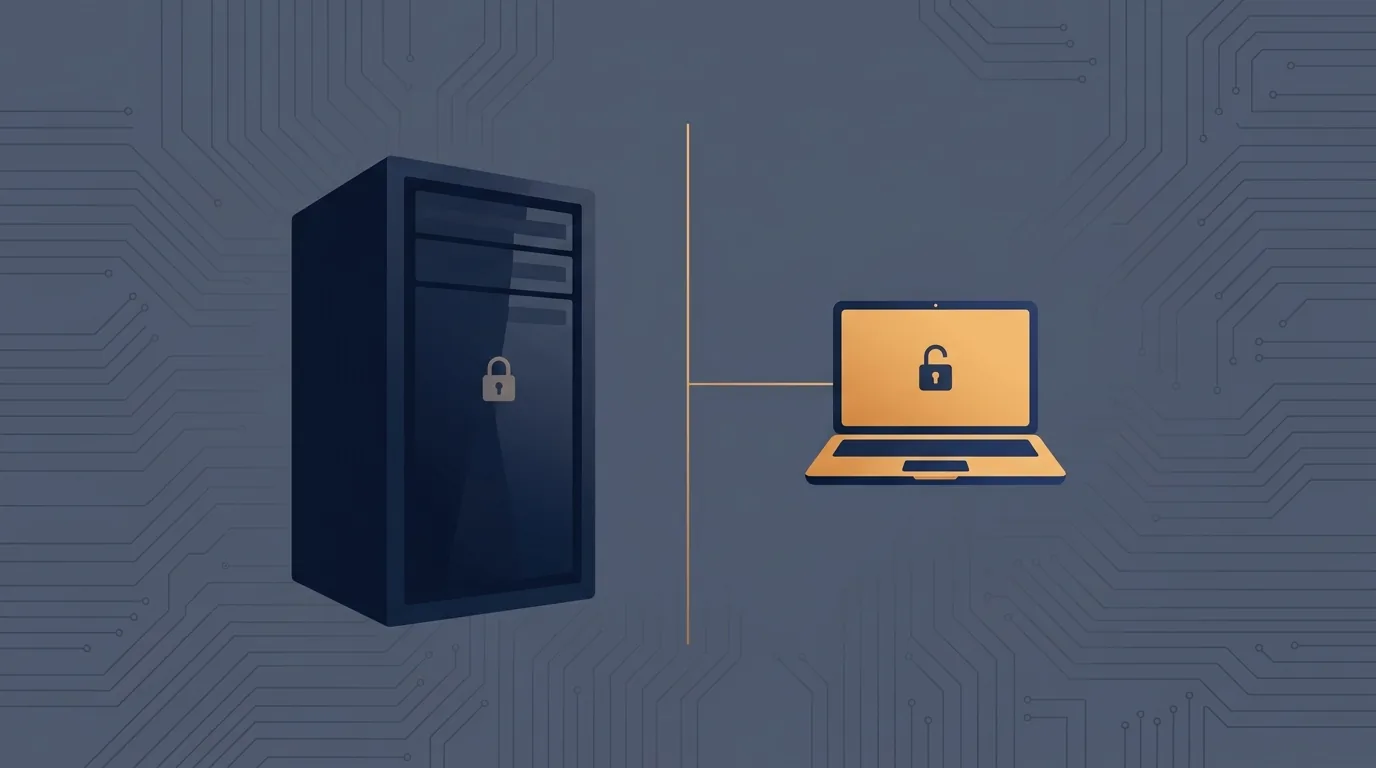
In one five-day stretch, Alibaba put a revenue-share clause on its flagship open model and shipped its locally-runnable sibling under plain Apache 2.0. The split shows which model actually matters for a self-hosting plan.
By the Cerevisor team
Alibaba shipped Qwen3.8-Max's open weights on August 12 with a new commercial license: businesses reselling it as a hosted service above $50 million in yearly revenue now owe a separate paid deal. Two days later it shipped Qwen3.8-27B, the small sibling most teams would actually self-host, under plain Apache 2.0. Meta's Muse Glimmer did the same that week. The license line is being drawn by model size, not by company, and the restricted model is usually not the one on a self-hosted GPU.
I keep a loose mental list of “things that would have been a big deal a year ago and are now a Tuesday,” and open-weight license changes just joined it. Open weight means the maker publishes a model’s actual parameters, the numbers a model learned during training, so anyone can download and run a copy on their own hardware instead of only calling someone else’s API. This week’s version is more interesting than most: two labs drew the same license line in the same five days, straight through the middle of a single product family.
Three releases, one license split, five days
On August 12, Alibaba’s Qwen team put its flagship Qwen3.8-Max open on Hugging Face. Qwen3.8-Max is a 2.4-trillion-parameter mixture-of-experts model, meaning only a slice of those parameters activates for any single request, which is part of why a model that large can exist at all. What changed is the license: Qwen dropped Apache 2.0, the permissive open-source license it used on earlier releases that carries no usage fee or revenue condition, for a bespoke one.
"aggregate revenue exceeds US$50 million over any consecutive 12-month period"
Cross that line running Qwen3.8-Max as a hosted “model as a service” or “AI work assistant” business, and the business owes Alibaba a separate commercial deal, revenue-share included, still being negotiated. Alibaba isn’t first: Moonshot AI put a near-identical structure on Kimi K3 in July, at a $20 million threshold and, per that reporting, “up to a 30 per cent revenue share.” Two frontier-scale labs, one pattern.
Then, on August 14, Qwen shipped Qwen3.8-27B: a dense 27-billion-parameter model, small enough to run on a single consumer graphics card, under plain Apache 2.0, no revenue clause. It hit #1 on Hacker News the next day. Meta did the same thing four days earlier with Muse Glimmer, a 30-billion-parameter model built to run on a laptop, also Apache 2.0.
| Model | Size | License | Runs on one consumer GPU |
|---|---|---|---|
| Qwen3.8-Max | 2.4T (MoE) | Custom, revenue-share above $50M/yr | No |
| Qwen3.8-27B | 27B (dense) | Apache 2.0 | Yes |
| Muse Glimmer | 30B (dense) | Apache 2.0 | Yes |
The line is drawn by model size, not by company or country
It would be easy to read this as “Alibaba got stricter.” The more useful read: the restriction landed on the model almost nobody self-hosts, while the models people can actually run on their own hardware stayed free. A lab in China and a lab in the US drew the line in the same place the same week: the frontier checkpoint only a handful of well-funded resellers would stand up gets metered, and the checkpoint that fits hardware a normal engineering team owns stays permissive enough to keep the developer base.
Open-weight licensing is no longer one decision per model family. It is a tier-dependent bundle, and the tier that matters for self-hosting is usually the one that stayed free.
What this changes for a self-hosting decision
For a team weighing whether to self-host, the model actually being sized for hardware is unlikely to be a 2.4-trillion-parameter flagship. It’s the 27B or 30B sibling that fits on a single card, and that’s exactly the checkpoint both Alibaba and Meta chose to keep unrestricted. The $20 to $50 million revenue thresholds target businesses reselling inference at scale, not a team running a model against its own product traffic.
The model getting the license restriction is usually not the model doing the self-hosted work.
That said, “usually not” is a check worth running, not an assumption. We looked at how our own harness handles this, since Cerevisor connects to self-hosted and third-party models through one provider setup regardless of which checkpoint is configured. Under the hood, which model gets called is just a text field, and the same request path handles it whether that field names the 27B checkpoint or the 2.4T one, with no license logic built in. Swapping a restricted flagship for its free sibling, or between vendors entirely, is a configuration change, not an integration project. Our guide to connecting local and OpenAI-compatible models covers how that setup works.
Backdrop for the budget conversation: GPU rental pricing has flattened. GetDeploying’s tracker, last updated August 10, puts on-demand H100 around $4.19 an hour, H200 around $4.50, up 6% over the past year but down slightly over the last four weeks. The hardware line isn’t where the action is this cycle. The license line is.
One thing to check before the next architecture review
Pull the exact checkpoint name out of the deployment plan, not just the model family, and check its license against the thresholds above. A team running the smaller sibling on its own hardware and its own traffic is nowhere near the businesses these clauses target. A plan that resells inference at scale is exactly who Alibaba and Moonshot are pricing this for, and that is the plan worth reading the license text for.
Sources
- Alibaba adds commercial restrictions to open-weight Qwen3.8-Max AI model - South China Morning Post, 2026-08-13
- Open Weights, Closed Revenue Ceiling: Alibaba's Qwen 3.8 License Is a Platform Play, Not a Gift - Forkast News, 2026-08-13
- Alibaba To Introduce Revenue Sharing For Qwen 3.8-Max Open Weights - Open Source For You, 2026-08-12
- Alibaba's Qwen team releases Qwen 3.8 models with open weights under the Apache 2.0 license - The Decoder, 2026-08-14
- Introducing Muse Glimmer: An Open Agentic Model That Runs on Your Device - Meta AI Research, 2026-08-10
- GPU Rental Price Index: Cloud GPU Price Trends (2026) - GetDeploying, 2026-08-10
Written by Kinan Hamwi, Founder of Cerevisor.