Engineering hiring held up. Your org chart still changed underneath it
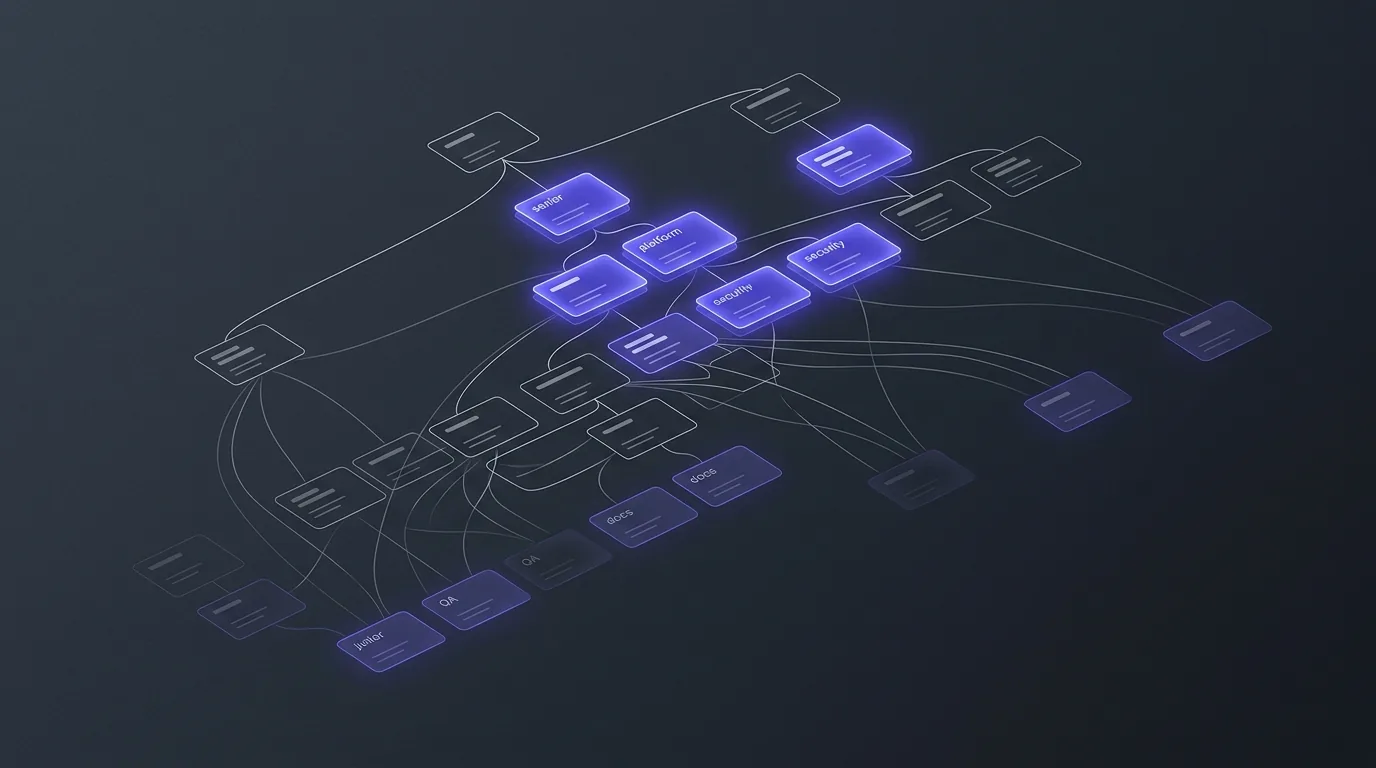
New hiring data shows engineering is the most resilient tech job function in the agent era. That resilient headcount number is an average, and the average is hiding which roles grew and which thinned out.
New hiring data says engineering is the most resilient tech job function in the agent era: roles down just 11% against a 25% overall hiring drop, and 55% of all new hires in 2025. The trap is reading that headline as "the org chart is fine." The same data shows the chart compressing into a senior-led core while QA, documentation, and junior roles thin out. The resilient number is an average, and the average hides the shift a CTO actually has to staff for.
I read a piece in TechCrunch on Tuesday that I expect a lot of CEOs to forward to their CTO with a single line: “See? We’re fine.” Marina Temkin walked through SignalFire’s State of Talent Report, and the headline is genuinely good news. The “AI code apocalypse” that everyone braced for did not show up. Engineering came out as the most resilient job function in tech.
For any leader who has spent the last six months in board meetings fielding the “should we freeze engineering hiring” question, that report is a get-out-of-jail card. Take the win. It is real.
Then read it a second time, slower, as the person who actually owns the org chart. Because the number that makes the board relax is an average. And the thing about an average is that it is the one statistic specifically designed to hide the distribution underneath it.
What the resilient-headcount number actually counts
Here is the data, because it deserves to be stated precisely rather than summarized into a vibe.
"While total hiring across large tech companies dropped 25% compared to 2019 levels, engineering roles saw a much smaller decline of just 11%."
That 11% versus 25% gap is the whole story in one sentence. Engineering did not just survive the hiring contraction. It outperformed it by more than two to one. Engineers made up 55% of all new hires in 2025 across the twelve companies SignalFire calls “Tech Majors,” up from 46% in 2019. Early-stage startups hired 7% more engineers in 2025 than they did in 2019.
The report’s explanation is the cleanest framing I have seen for why the apocalypse stalled. It is the Jevons paradox. Make a resource cheaper to use and people do not use less of it, they use more, because the work expands to fill the new capacity. Asher Bantock at SignalFire put it plainly: engineers are “suddenly a lot more productive, and there’s endless work for them to do.” Jensen Huang said engineers at Nvidia are “busier than ever” since the agentic tools went in. Anthropic’s own economics lead noted there is “at least no larger material difference in unemployment rates” between AI-exposed and less-exposed workers.
So far, so reassuring. Stop reading there and the conclusion is that coding agents made engineers more valuable, not less, and the right move is to keep hiring. That conclusion is correct.
It is also incomplete in a way that costs real money if a leader acts on the headline alone.
The composition shift the average is hiding
Same report, different sentence. The 2026 company, SignalFire found, is “compressing into a senior-led engineering core.” AI tools dramatically increase the speed of senior engineers, so the org thickens at the top. And the roles being cut are not random. They cluster: QA, documentation, and junior development. The roles growing are AI engineering, platform engineering, and security.
Read those two lists again, because they are the actual org-design event hiding inside the friendly aggregate. The work that thinned out is the authoring-heavy, well-scoped, learn-by-doing work. The work that grew is the work of directing agents, building the platform they run on, and containing what they do.
This is the part the headcount total cannot show. Imagine two companies that both report “engineering hiring flat.” Company A kept a balanced pyramid. Company B cut its junior and QA rungs, kept its seniors, and called the net number flat. On the slide, they look identical. Inside, they are completely different organizations, and one of them just quietly stopped manufacturing its own future senior engineers.
There is a real mechanism under this, and it predates this week. Mark Russinovich and Scott Hanselman wrote a piece in Communications of the ACM back in April about what they called “AI drag” on early-in-career developers. Their finding was that agents give seniors a big lift while slowing down juniors, because steering and verifying agent output requires judgment that juniors have not built yet. In their data, 32% of seniors reported more than half their code is AI-generated, versus 13% of juniors. The senior knows when to distrust the agent. The junior does not yet. So the agent makes the senior faster and leaves the junior treading water.
Put the April mechanism next to the June hiring data and the picture resolves. The org is not shedding engineers. It is shedding the entry points and the manual-checking roles, and concentrating into people who can direct and verify. That is a composition change wearing the costume of a stable headcount.
"Engineering hiring is resilient" and "we just thinned our junior and QA rungs" are both true at once. The aggregate stays flat while the shape of the org changes underneath it. The board sees the aggregate. The engineering leader owns the shape.
Where this trips teams up in practice
I keep seeing the same three gaps open up when a team rides the resilient-headcount number without looking at the shape.
The first is the verification gap. Thinning out QA and junior roles does not remove the work those roles were doing. It removes the people who were implicitly absorbing it. Code review, edge-case checking, the boring discipline of confirming the thing actually does what the ticket said: that load does not vanish when an agent writes the code. It moves. Usually it moves onto the seniors, who are also the people the org just made “more productive,” which is a polite way of saying they got handed more output to verify with less help. If nobody is named as the owner of that verification load, it lands on whoever is least able to say no.
The second is the apprenticeship gap. The junior rung was never just cheap labor. It was the pipeline. It is how a person becomes the senior who can steer an agent in three years. Cut the role that used to teach that judgment and the org has optimized this year’s delivery by borrowing against its own talent supply. The bill arrives later, and it does not show up on any current quarter’s metrics, which is exactly what makes it easy to ignore.
The third is the ownership gap, and this one snuck in through finance this week. In a separate TechCrunch piece on the same day, Lucas Ropek covered companies scrambling to keep employees from maxing out AI budgets on small tasks. The line that stuck with me was from an operator named Kwak.
"We're hitting this inflection point where AI is becoming material to the cost structure. Spend is becoming very unpredictable; and leadership, especially at the CFO, COO, and CIO level, are still asking the question of whether they're getting value from what we're spending on in the context of AI."
That is an org question dressed as a finance question. Agent output and agent spend are both growing, and in a lot of teams nobody specific owns either. When the CFO asks who is accountable for the value of the agent spend, “the engineering team” is not an answer. It is the absence of one.
How to read the chart before the board reads the headline
Here is what I would do this week, before the next calibration or board update, while the good-news report is still fresh on everyone’s desk.
Pull the company’s own composition, not the industry average. Look at engineering hires and exits over the last four quarters and bucket them by level and function, not just by total. If junior and QA numbers fell while senior and platform numbers held, that is the senior-led-core shape, and it is a decision worth making on purpose rather than discovering later.
Name a verification owner per service area. Not a rotation, not a Slack channel, a person whose job description includes owning whether agent-written code in that area is actually correct before it merges. The verification load is real whether or not it gets staffed. Staffing it is cheaper than the incident that finds it instead.
Protect one entry point on purpose. If the apprenticeship rung is thinning across the industry, the teams that keep deliberately growing juniors next to seniors and agents will own the senior talent supply in three years, while everyone else bids for the same shrinking pool. That is not charity. It is the cheapest senior-engineer acquisition strategy available right now.
And when the resilient-headcount number goes to the board, bring the shape with it. Tie any hiring decision to the company’s own verified productivity delta, not to the industry headline. The report is a great reason not to freeze hiring. It is not a reason to stop looking at which boxes on the chart grew and which ones quietly emptied out.
The resilient-headcount number is the one statistic specifically designed to hide the distribution underneath it.
Reading the distribution, not the average
The honest read on this week is that the doom story was wrong and the relief story is only half right. Engineering held up. Agents made engineers more valuable, not disposable, and the Jevons paradox is doing exactly what the economists said it would. That is worth being genuinely glad about, and the board deserves to be glad too.
Just do not let “engineering hiring is resilient” quietly become “our org structure is fine.” Those are different claims. The first is about a number. The second is about a shape, and the shape changed underneath the number while everyone was watching the number.
The companies that come out of this strong will not be the ones with the best agent. They will be the ones who looked at their own org chart honestly, noticed which rungs were thinning, named who owns the verification load, and decided on purpose whether to keep growing the people who become tomorrow’s seniors. That is not a heroic move. It is just reading the distribution instead of the average, which has always been the difference between managing the org a company actually has and managing the headline about it.
Sources
- AI was supposed to kill engineering jobs, but new data suggests they're the most resilient - TechCrunch, 2026-06-24
- Companies are scrambling to stop employees from maxing out AI budgets with small tasks - TechCrunch, 2026-06-24
- US tech layoffs record single-highest month in two years, AI the most cited reason - Tom's Hardware, 2026-06-04
- Microsoft's Russinovich and Hanselman Warn AI Is Hollowing out the Junior Developer Pipeline - InfoQ / Communications of the ACM, 2026-04-01
Written by Kinan Hamwi, Founder of Cerevisor.