Why AI Brain Fry Comes From Oversight, Not Delegation
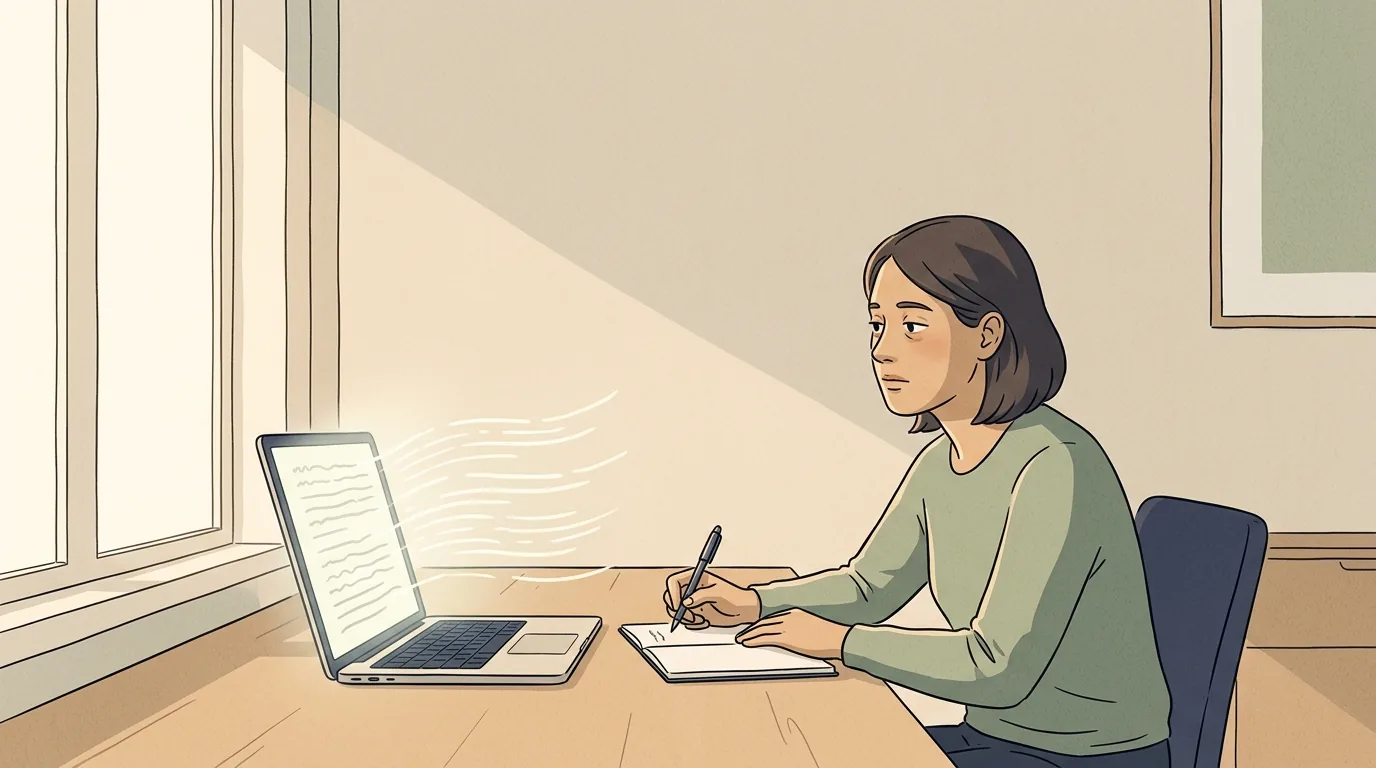
A March 2026 BCG/Harvard Business Review study of 1,488 U.S. workers names the cost most of us have felt and few of us have measured. AI fatigue isn't from delegating work to AI. It's from supervising it.
A March 2026 BCG and Harvard Business Review study of 1,488 U.S. workers gives a clean number to a feeling most of us have noticed this year. About one in seven AI users report acute mental fatigue from AI use. The mechanism is not the work AI does. It is the work of watching AI do work, and the timing matters because agentic mode just shipped into Word, Excel, PowerPoint, and ChatGPT.
Today’s hook
I keep seeing the same pattern on calls this month. People are not tired of using AI. They are tired of watching it. The keyboard has cooled, the doc is half written, and they are sitting there waiting to decide whether the next sentence is right. A Harvard Business Review piece this March put a number on that quiet cost. The timing is interesting, because agentic Copilot in Word, Excel, and PowerPoint and workspace agents in ChatGPT all went generally available a week before the survey landed in my inbox.
What the research shows
The piece is “When Using AI Leads to ‘Brain Fry,’” written by Julie Bedard, Matthew Kropp, and Megan Hsu of BCG with Olivia Karaman and Jason Hawes of UC Riverside and Gabriella Rosen Kellerman of BCG. It draws on a Boston Consulting Group survey of 1,488 U.S. full-time workers. The headline finding is the kind that travels well. About one in seven AI users report acute mental fatigue from AI use. In marketing, where the oversight load runs continuously, the rate climbs to 26 percent.
The more useful finding is in the mechanism. Workers who use AI to delegate repetitive tasks tend to feel better, not worse. Workers who supervise multiple AI outputs at once feel worse. Bedard described it directly to CBS News. The cost is not the model running. The cost is the person watching the model run, deciding whether each output is right, switching context to fix what is wrong, and then deciding what to ask next.
"About 1 in 7 workers reported experiencing mental fatigue from juggling AI tools at work."
That cost has a name in older work. The contemplative-science tradition has been arguing for two decades that the small unstructured gaps in cognition, the moments when nothing is being asked of you, are where memory consolidates, where ideas recombine, and where a person notices their own thinking. The foundational paper is Smallwood and Schooler’s 2006 “The Restless Mind” in Psychological Bulletin. The framework was extended in Christoff and colleagues’ 2016 piece in Nature Reviews Neuroscience. We now have a 2026 number for what those gaps cost when they go missing. This is the same pattern we wrote about Tuesday in [team attention under always-on AI assistants], from a different angle. Faster work, thinner thinking. It is also next door to the harness side of the question, where coding-agent ROI shows up first turned out to be in critical-path delegation, not in long-tail supervision.
What it doesn’t tell us yet
The HBR study is a survey, not an experiment. It establishes a strong association between continuous oversight and acute cognitive fatigue, but it does not isolate cause. The 26 percent marketing number is a subset finding, useful as direction more than population estimate. And the mind-wandering literature was developed before generative AI existed. We are applying older landmark work to a newer question. There is no 2026 paper yet measuring brain-network activity during AI co-work specifically. That paper is presumably being written. For now, the BCG and HBR finding gives us the cost, and the older literature gives us a name for the missing thing.
One thing to notice in your work today
If you are in front of an AI tool for most of the day, notice the difference between the moments when a task is handed off and you walk away, and the moments when the screen is doing something and you are sitting there waiting. Not as advice. Just as data. Bedard’s mechanism says the second kind is what is expensive. The mind-wandering literature suggests the first kind is also where some of the better thinking has tended to happen, even though it does not look productive on a screen. The study cannot tell you what to do with that noticing. It just suggests it is worth noticing.
Sources
- When Using AI Leads to 'Brain Fry' - Harvard Business Review, 2026-03-05
- Is AI Productivity Prompting Burnout? Study Finds New Pattern of 'AI Brain Fry' - CBS News, 2026-03-08
- AI and the Rise of Cognitive Overload - George Mason University College of Public Health, 2026-03-24
- The Restless Mind - Psychological Bulletin, 2006-11-01
- Mind-Wandering as Spontaneous Thought: A Dynamic Framework - Nature Reviews Neuroscience, 2016-09-26
Written by Kinan Hamwi, Founder of Cerevisor.